
Think Different, Act Wild, Make Art: Creativity's Big Week in the Bay
March 15, 2026
Greetings science fans!
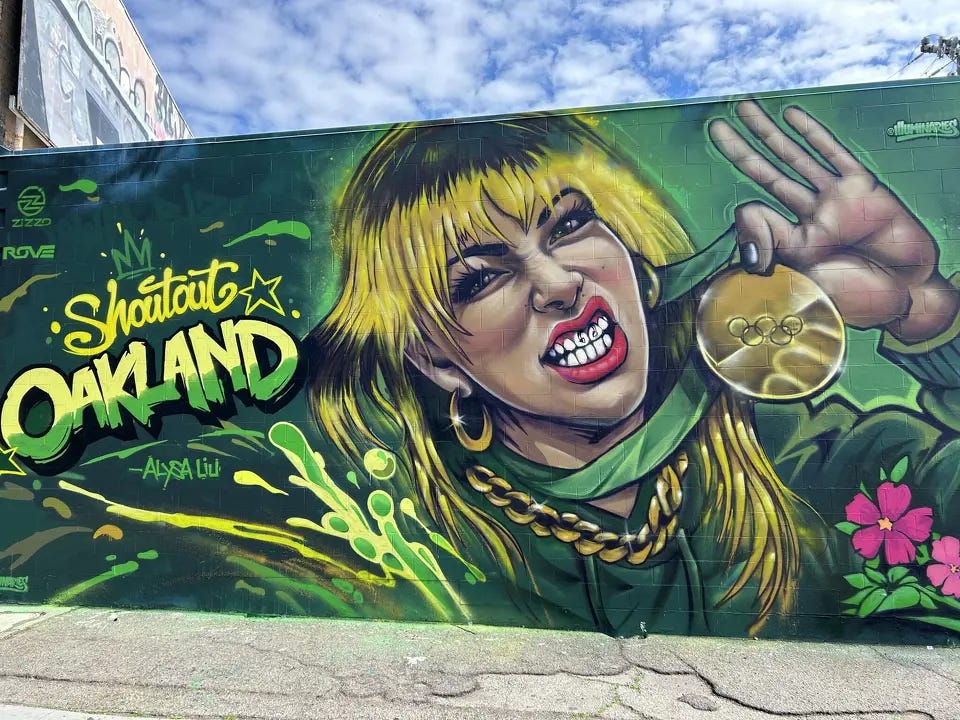
It has been quite a week for Bay Area creativity. Last Thursday, thousands packed Frank Ogawa Plaza to welcome home Oakland’s own Alysa Liu, who took two gold medals to Milan and brought them right back to the city that raised her. At her request, she skipped the parade in favor of a celebration that would shine a light on Oakland’s artists and community. Then tonight, at the 98th Academy Awards, Richmond-raised Ryan Coogler took home his first Oscar for Best Original Screenplay for Sinners, making him only the second Black American filmmaker ever to receive that award. Two Bay Area artists, two very different stages, one very loud reminder that this region does not lack for creative fire.
The Turing Test for the Soul
Which makes this week’s AI and art event all the more timely. A recent large-scale study pitting more than 100,000 people against today’s AI systems found that some models, including GPT-4, can exceed average human scores on tasks measuring divergent linguistic creativity, a narrowly defined form of brainstorming and word association. The most creative humans, especially the top tier, still leave AI well behind, particularly when it comes to richer work like storytelling and poetry.
So what does that mean? Are we in a creativity arms race? And more importantly: does scoring well on a word-association benchmark actually make you an artist?
Researchers define creativity in two stages: the generative burst of ideation, and the harder work of convergent thinking - deciding what to make, and then making it. New research from the University of Houston found that in the implementation stage, AI is still very helpful for everyday users, but creates more work for expert creators, because they have years of training to materialize a piece of artwork, and AI uses different techniques that can be burdensome to revise.
In other words, AI might help you brainstorm, but it struggles to know what the piece wants to be. That intuition, the thing that makes an artist reach for a different color at the last second, or as Alysa Liu would say, just perform to the music and let the gold follow, remains stubbornly human.
Which brings us, naturally, to Apple. Fifty years ago next month, two Steves founded a company in a garage with a radical belief: that the tools of creation shouldn’t be locked in corporate mainframes but placed in the hands of regular people. That idea didn’t come from nowhere. It came from the Whole Earth Catalog, from Stewart Brand’s conviction that access to tools was a form of liberation - that the act of making something, whether music, a farm, or a computer program, was itself a political act. This week’s lineup draws a straight line from that moment to our current AI-saturated present, and asks whether any non-human entity can truly be said to create.
Meanwhile, at Año Nuevo...
Speaking of Bay Area wildlife drama, it is not all peaceful sunbathing on the rocks right now. A bird flu outbreak first confirmed in elephant seals along the California coast has since spread to sea otters and sea lions at Año Nuevo State Park in San Mateo County, with scientists in hazmat suits monitoring the situation on the ground. The popular guided seal tours have been cancelled for the rest of the season. It is a sobering reminder that the Bay Area’s most iconic wildlife, the very animals Jeff Miller will be celebrating Thursday night, are never far from existential threat. Conservation, as it turns out, is not a passive spectacle. It is an ongoing negotiation between humans and the wild world that, with a little luck and a lot of work, surrounds us.
My Top 3 Bay Area Science Events (March 16 – 22)
Think Different: Apple, the Counterculture, and Digital Culture, 1976-2026 (Monday, March 16, San Francisco) Apple turns 50 on April 1, and this event at Manny’s is one of the more substantive ways to mark the occasion. John Markoff and Fred Turner, two of the best chroniclers of how the Summer of Love became Silicon Valley, join American Studies scholar Peter Richardson to trace the hippie values baked into Apple’s founding DNA, and ask how those ideals fared as the company became one of the most valuable on earth. If you have ever wondered how Stewart Brand’s Whole Earth Catalog connects to your iPhone, this is your evening.
Tales of Animal Sex, Murder and Mayhem (Thursday, March 19, Berkeley) Naturalist and conservationist Jeff Miller brings his Bay Area Wildlife guide to the David Brower Center for what promises to be an irreverent and entertaining tour through the region’s most charismatic fauna. Tule elk, elephant seals, river otters, beavers, bald eagles, burrowing owls, salmon, condors: the full cast is here. Come for the murder and mayhem, stay for the conservation hope. Advance registration required for in-person; also available online.
Art without an Artist: Can AI be Considered an Artist? (Friday, March 20, San Mateo) This one is worth the drive to College of San Mateo. Mohsen Janatpour takes on one of the most genuinely contested questions of our moment: not whether humans can use AI to make art (that debate is largely settled), but whether AI itself can be considered an artist. He will share his own non-AI-generated work as a deliberate counterpoint, and the evening closes with a reception and, weather permitting, telescope viewing of the night sky with the San Mateo County Astronomical Society. It is, somehow, the perfect combination.
Have a great week in science!
-Kishore
Upcoming Events:
Click to see the next two weeks of events in your browser.
Monday, 03/16/2026
Novel Career Pathway: Research to Regulation - 03/16/2026 12:00 PM
Sonoma State University - Biology Colloquium Rohnert Park
Speaker: Joseph Jackson, Environmental Compliance Inspector, Contra Costa County
Editor’s Note: Lauren Ashlock, UC Davis, was originally scheduled to speak today
Reconciling Impressive AI Benchmark Performance with Limited Developer Productivity Impacts - 03/16/2026 12:00 PM
Gates Computer Science Building Stanford
AI coding agents now complete multi-hour coding benchmarks with roughly 50% reliability, yet a randomized trial found experienced open-source developers took about 19% longer when allowed frontier AI tools than when tools were disallowed.
This talk presents the evidence on the productivity paradox in AI coding, shows the bottlenecks in deployment, and outlines the next steps for understanding AI’s productivity impacts
Speaker: Joel Becker, METR
Registerat weblink to attend in person or via Zoom
Rethinking Materials for a Resource-Constrained World: Pathways to Sustainable and Equitable Infrastructure - 03/16/2026 12:00 PM
Davis Hall Berkeley
Materials - particularly infrastructure materials - account for a substantial share of global energy use, mineral extraction, and anthropogenic CO2 emissions. Yet they remain essential for the built environment that underpins meeting quality of life needs, and demand for them is expected to grow. Addressing their climate impacts therefore requires approaches that consider interactions across value chains, engineering design, environmental systems, and societal factors, including disproportionate burdens on vulnerable communities. There is an urgent need for quantitative frameworks that can guide the discovery and deployment of materials capable of meeting sustainability targets while also addressing inequities linked to climate burdens as well as resource extraction, processing methods, and disposal. Our work advances this goal through integrated experimental and modeling efforts used to evaluate alternative materials, identify drivers of localized environmental impacts, and develop strategies to reduce resource scarcity and, to the extent possible, reverse environmental damage, including through carbon dioxide removal. This research also examines trade-offs among competing system demands - such as energy and materials production - while ensuring necessary materials performance and durability under varied environmental conditions. Factors such as regional resource availability, local and application-specific performance requirements, and production methods yield spatiotemporal variation in potentially viable mitigation methods. This presentation will highlight key findings from our work and outline critical directions for future research.
Speaker: Sabbie Miller, UC Berkeley
Attend in person or online (see weblink)
Bumps, Wiggles, and Vibrations: Hints of Dark Matter in Our Galaxy - 03/16/2026 04:15 PM
Physics North Berkeley
The nature of dark matter remains an outstanding question in physics, driving searches across a vast range of scales, from microscopic interactions to the cosmos. In this talk, I will explore two exciting avenues for probing dark matter: direct interactions with materials and its influence on stellar streams. At sub-GeV masses, traditional direct detection methods become ineffective, requiring new approaches that exploit the material properties of detector crystals to observe nuclear recoils and phonon excitations. Meanwhile, in the Milky Way, stellar streams serve as cosmic detectors, offering a unique way to probe the presence of low-mass dark matter subhalos through perturbations in their structure. I will discuss developments in both of these frontiers, highlighting how they can contribute to our ongoing search for the subtle signatures of dark matter.
Speaker: Tongyan Lin, UC Berkeley
First Results from the JUNO Experiment - 03/16/2026 04:30 PM
Stanford Linear Accelerator (SLAC) Colloquium Series Menlo Park
Neutrinos are elusive particles with unique properties that offer key insights into the fundamental structure of matter and the cosmic sources that produce them. The Jiangmen Underground Neutrino Observatory (JUNO) is a next-generation, 20-kiloton liquid scintillator detector, the largest of its kind in the world, located in China and recently brought into operation after more than a decade of design and construction. In this talk, I will review the initial detector performance and present the first results from the experiment, based on about 60 days of data, which provide world-leading estimates of two neutrino oscillation parameters. I will also briefly outline the broader physics program enabled by JUNO and the additional measurements it aims to pursue.
Speaker: Juan Pedro Ochoa-Ricoux, UC Irvine
Attend in person or online (see weblink)
The Science of “Why We Click” With Certain People … and Not Others - CANCELED - 03/16/2026 06:00 PM
Commonwealth Club San Francisco
Why do you immediately click with some people while others just as inexplicably turn you off? Do people emit vibes? Is it possible to read a room? Are bad habits contagious?
Kate Murphy, author of the international bestseller You’re Not Listening, answers these and other fascinating questions in Why We Click, a new book that explores the emerging science and outsize impact of “interpersonal synchrony,” a very consequential social dynamic most people have never heard of. Interpersonal synchrony is the seemingly magical, yet now scientifically documented, tendency of human beings to fall into rhythm and find resonance with one another.
Not only do we subconsciously match one another’s movements, postures, facial expressions and gestures; recent breakthroughs in technology have revealed we also sync up our heart rates, blood pressure, brainwaves, pupil dilation and hormonal activity. The result is that emotions, moods, attitudes and subsequent behaviors can be as infectious as any disease, and can have just as profound an impact on our health and well-being.
Join us as Murphy interweaves science, philosophy, literature, history, business management theory, pop culture and plenty of relatable, real-world examples to explain why being “in sync,” “in tune,” “in step,” and “on the same wavelength” are more than just turns of phrase. From the bedroom to the boardroom and beyond, Murphy reveals how our instinct to sync with others drives much of our behavior and how our deepest desires, to be known, admired, loved and connected, are so often thwarted in modern life.
Dopamine and the Real Neuroscience of Motivation - SOLD OUT - 03/16/2026 07:00 PM
Cafe du Nord San Francisco
Dopamine is everywhere - on podcasts, in productivity hacks, in conversations about addiction, motivation, and “dopamine detox.” But what does neuroscience actually say?
In this lecture, Lucas Encarnacion-Rivera, PhD candidate in Neuroscience at Stanford University School of Medicine, cuts through the hype to separate fact from fiction about the brain’s most talked-about neurotransmitter. Together, we’ll explore what dopamine really does, what it doesn’t do, and how it shapes motivation, reward, learning, and everyday behavior.
Drawing on cutting-edge research in computational and systems neuroscience, Lucas will explain how dopamine fits into the brain’s broader systems regulating drive and action - offering a grounded, science-based perspective on a chemical that’s often misunderstood. Leave with clarity, not clickbait.
Think Different: Apple, the Counterculture, and Digital Culture, 1976-2026 - 03/16/2026 07:30 PM
Manny’s San Francisco
Join us for this talk on the counterculture’s significant influence on Apple’s origin story as the company turns 50 on April 1st.
As we approach the 50th anniversary of Apple Inc. on April 1, 2026, the counterculture’s influence on the company’s origins and brand continues to draw significant attention. This program will look at the founding of Apple through the lens of the counterculture movement that, by the mid-1970s, was shaping Silicon Valley as well as mainstream culture. What role did hippie values play in Apple’s early days? How did these values fare as the company became a tech giant? What does Apple’s story tell us about the tech industry’s history and profile today?
Two leading experts will address these questions and others. John Markoff is a former New York Times technology reporter and the author of two critically acclaimed books:Whole Earth: The Many Lives of Stewart Brand(2022) and What The Dormouse Said: How the Sixties Counterculture Shaped the Personal Computing Industry (2005).Fred Turner is the Harry and Norman Chandler Professor of Communication at Stanford University. His publications include From Counterculture to Cyberculture: Stewart Brand, the Whole Earth Network, and the Rise of Digital Utopianism (2006), a seminal book on this critical subject.
Markoff and Turner will be in conversation with Peter Richardson, who taught American Studies at San Francisco State University and has written extensively about Bay Area culture. His latest book, Brand New Beat: The Wild Rise of Rolling Stone Magazine, will appear in April.
Tuesday, 03/17/2026
Learning the Earth’s Hidden Structure with Sparse Observations and Subsurface World Models - 03/17/2026 10:00 AM
Green Earth Sciences Building Stanford
Understanding the structure of the Earth’s subsurface is fundamentally an inverse problem with sparse direct observations and abundant indirect measurements. Drillholes provide precise but extremely limited information, while geophysical signals such as gravity, magnetics, and seismic data provide broader but indirect constraints on the underlying geology.
In this talk, I introduce the concept of subsurface world models, generative AI systems trained to learn the statistical and physical structure of the Earth from large ensembles of synthetic geological models and geophysical simulations. These models combine sparse hard constraints such as drilling and geochemistry with dense indirect observations from geophysics to infer plausible three-dimensional geological structures while quantifying uncertainty.
Such models offer a new approach to mineral exploration and resource discovery. More broadly, subsurface world models provide a framework for reconstructing hidden planetary interiors from limited observations, with potential applications in geohazard assessment, geothermal exploration, carbon storage, and planetary exploration.
Speaker: Gerrit Olivier, Fleet Space Technology
Chemistry for Medicinal Chemistry - 03/17/2026 11:00 AM
Latimer Hall Berkeley
Pyridines and diazines are ubiquitous in pharmaceuticals and agrochemicals, yet there are limits in the synthetic methods that can directly transform these structures. We will present three distinct strategies for manipulating these heterocycles into more valuable derivatives. First, we will show that they can be converted into phosphonium salts with a wealth of subsequent reactivity, particularly via phosphorus-ligand coupling reactions. Second, we have devised a strategy for pyridine functionalization using a ring-opening, electrophile-coupling, and ring-closing process that exploits Zincke-type intermediates. Third, we will present the concept of deconstruction-reconstruction as a means to achieve both transformation of azines C-H bonds and skeletal editing of these heterocycles. Our lab has also performed mechanistic and computational studies of the regioselectivity of these processes and their reaction pathways.
Speaker: Andy McNally, Colorado State University
High-Speed Micromirror-Based Spatial Light Modulators - 03/17/2026 12:00 PM
Cory Hall Berkeley
Spatial light modulators (SLMs) enable dynamic optical patterning through pixel-level control of coherent light, facilitating emerging applications such as optical neural interfaces, deep tissue optical imaging, and near-eye displays for augmented and virtual reality. However, the advancement of many of these applications is constrained by the limitations of commercial SLMs, which suffer from either low optical efficiency (e.g., tip/tilt digital micromirror devices) or low refresh rates (e.g., liquid crystal on silicon based SLMs). In this talk, I will present our work developing a piston-motion micromirror array with a co-designed integrated circuit driver, aimed at achieving an overall system with high optical efficiency and a refresh rate of >5kHz.
Speaker: Liz Murray, UC Berkeley
Deep-Time Climates as Stress Tests for Earth System Models - 03/17/2026 12:00 PM
Braun (Geology) Corner (Bldg 320), Rm 220 Stanford
Atmospheric CO2 concentrations continue to rise, yet uncertainty in equilibrium climate sensitivity (ECS) remains large, with implications for future warming projections. In this talk, I use simulations of past climate states to assess Earth system model performance and to diagnose sources of model bias. By comparing multiple generations of the Community Earth System Model (CESM) against paleoclimate proxy constraints, I show that very high ECS values (as in CESM2) overestimate both Eocene warmth and glacial cooling, whereas a moderate, state-dependent ECS - one that increases with warming - better reconciles models and data. These results demonstrate how paleoclimate benchmarks can identify physical and parameterization issues (especially in cloud microphysics and turbulence schemes), refine model sensitivity, provide insights into the longstanding “equable climate problem”, and ultimately improve confidence in projections of future climate change.
Speaker: Chris Poulsen, University of Oregon
Solvated Electrons: One of Nature’s Most Reactive Species Caught at the Surface of Water - 03/17/2026 04:00 PM
Latimer Hall Berkeley
The solvated electron (es-) is one of nature’s most powerful transient reactants, with thousands of reactions identified in water. What happens when these electrons are born near the surface of water instead of deep in the bulk? We create near-surface electrons by exposing a water microjet in vacuum to sodium atoms. These Na atoms immediately ionize into Na+(aq) and es- in the top few layers of water. When we add a surface-active molecule to the solution, reactions between es- and the surfactant can be localized near the outermost region. These gas-liquid scattering experiments have their origins in Y. T. Lee’s pioneering gas-gas scattering experiments using crossed molecular beams. Our efforts build upon this legacy to help unravel the dynamics of elementary chemical reactions between gases and liquids. We will show that, when surfactants are present, the interfacial region is often where the (re)action is, even for a liquid! This talk will include some fun hands-on activities with soapy water. Please bring a water bottle with you if you have one and prepare to get a bit wet.
Speaker: Gilbert Nathanson, University of Wisconsin, Madison
Hitchhiker’s Guide to Marine Invasions: How Ships Unwittingly Aid - And Combat - Invasive Species - Livestream - 03/17/2026 04:00 PM
Smithsonian Environmental Research Center
Our global economy has an unintended consequence: The same ships that move goods around the world can also inadvertently move invasive species. Many of these hitchhikers get pulled into the ballast water that ships carry in their hulls for stability. In this talk, explore the invisible journeys happening below decks with Dr. Jenny Carney-Zollars, the head of Smithsonian Environmental Research Center’s ballast water sampling program. Dr. Carney-Zollars will highlight how ships transport invasive species, how the scientists on her team can detect organisms often invisible to the naked eye, and what strategies are working to help ships reduce the risk of spreading invasive species along their routes.
Register at weblink
Productivity Gains And Labor Pains: What Will AI Do To Jobs? - 03/17/2026 05:00 PM
Traitel Building Stanford
AI will transform the nature of work - but how quickly, which sectors first, and with what consequences? This event brings together leading technologists, economists and policymakers to assess what’s happening and what needs to be done. Join us for a timely and thought-provoking discussion about how AI is reshaping the workplace and what leaders need to do in response.
Register at weblink to attend.
Popping the Science Bubble - Two Talks - 03/17/2026 05:30 PM
Berkeley Public Library Berkeley
Sneaking into cells: How plants are helping rewrite their own DNA
Speaker: Kylee Hillman, UC Berkeley
The 3-billion year war: How bacteria-virus conflict shapes our world
Speaker: Emily Kibby, UC Berkeley
Attend in person or via zoom
Mushrooms + Culture of Greece - 03/17/2026 07:30 PM
Mycological Society of San Francisco San Francisco
Olga Tzogas of Smugtown Mushrooms, based in Rochester, NY returns to her ancestral home to interact, learn and connect deeper to the mycelial communities, and the people still practicing traditional ways of life or those creating a new. Greece is typically pictured by blue bird skies and matching crystalline seascapes, but Greece is home to lush dense forests of several Oak species, Chestnut, Beech, Fir, Sycamores and Pine to name a few. The life they harbor is exquisite. See the similarities of fungal life that are shared on both continents. Together we see a visual depiction of the funga, flora + fauna of this diverse ecological haven of the country of Greece. Experience the diverse and lush natural world of Greece is its ancient forests, traditional land based living still exist, providing a rich culture weaved within nature itself. Connections to fungi are ever present and it’s only gaining more attention. Take a look into the relationships the locals have with certain species of mushrooms, plants, & their recipes for use.
Attend in person or click here to watch on Zoom
Wednesday, 03/18/2026
‘Making Kin with Trees’ - 03/18/2026 10:00 AM
The Plant Initiative
This conversation with environmental humanities scholar and author Solvejg Nitzke will explore intriguing questions that are raised in her recent book Making Kin with Trees. A Cultural Poetics of Interspecies Care such as: Is it ok for scientists to be, or to admit to be, tree huggers? What does referring to oneself (even ironically) as a “tree hugger” reveal about one’s stance toward trees, such as their potential sentience? Are there ways in which science and storytelling should or shouldn’t be connected?
What are the barriers between intellectual and emotional connections with trees, and what are the reasons for and results of these barriers? How does science and nature writing about trees impact caring about trees? Are there ways in which non-fictional writing about trees can foster future co-existence?
The conversation will be moderated by Laura Pustarfi, a Plant Initiative board member.
Register at weblink
Local- to global-scale autonomous observations of ocean carbon and oxygen - 03/18/2026 11:00 AM
Monterey Bay Aquarium Research Institute Moss Landing
The ocean plays an important role in the global carbon and oxygen cycles, but monitoring these processes using traditional ship-based methods is often challenging due to the vast size and dynamic nature of our oceans. Thankfully, autonomous assets, like Biogeochemical (BGC) Argo and autonomous surface vehicles (ASVs), have revolutionized ocean observing by dramatically increasing the number of measurements across both space and time. In this talk, I’ll discuss how I’ve leveraged the BGC-Argo array to explore carbon and oxygen cycles from the regional to the global scale and how I will use an ASV to design observation strategies for marine carbon dioxide removal interventions at the local scale. This talk will span various spatial and temporal scales, tackling important questions in ocean observing, to help improve our understanding of the current state of the ocean to better model the future one.
Speaker: Ellen Park, Dalhousie University
Attend in person or via Zoom (see weblink
UC Santa Cruz Whole Earth Seminar - 03/18/2026 12:00 PM
Earth and Marine Sciences Building Santa Cruz
Speaker:Andrew Fisher, UC Santa Cruz
Editor’s Note: Matt Savoca, Hopkins Marine Station was originally scheduled to talk today.
‘Time’s Second Arrow’ - Livestream - 03/18/2026 03:30 PM
Carnegie Science
Join Carnegie Science researchers Robert M. Hazen and Michael L. Wong for a lively discussion about their proposed “second arrow of time” - a heretofore missing law of nature that explains how the marvelously complex constituents of our universe came to be. They will explain how the natural process of selection for function has shaped the universe since its inception, and how this new law could possibly help us identify life on other planets, fight cancer, and - perhaps - even understand the purpose and meaning of life on Earth in a new way.
Register for the webinar at weblink
The Future of K-12 is Here: How AI is Shaping the Future of Education - 03/18/2026 06:00 PM
Manny’s San Francisco
Join leading experts Sunanna Chand, Alex Kotran, and Dr. Victor Lee in discussion on how K-12 schooling needs to adapt and meld with AI now.
Education has long been rooted in producing workers that fit the needs of the workforce in that day and age. But as AI takes root in jobs and shifts workforce demands, how are we adapting? How should we be educating the younger generations to fit the needs of the future workforce? How, if at all, can we integrate AI into education best-practices?
All these questions and more will be answered in this critical conversation on the blending AI and the future of K-12 schooling.
Join Sunanna Chand, Executive Director of The Reinvention Lab at Teach For America; Alex Kotran, Co-Founder and CEO, The AI Education Project (aiEDU); and Dr. Victor Lee, faculty lead for the Stanford Accelerator for Learning’s initiative on AI and Education.
GTC 2026 After Hours: From Models to Agents to Infra - 03/18/2026 06:00 PM
Plug and Play Tech Center Sunnyvale
The AI stack is shifting fast - frontier models, agentic architectures, and the infrastructure underneath are all evolving in real time. But what’s actually working in production vs. what’s still hype?
Novita AI, together with FounderCoho, is hosting a high-energy after-hours event during NVIDIA GTC 2026, featuring speakers from NVIDIA, Google DeepMind, Alibaba Cloud Intelligence (Qwen/Wan), Hugging Face, Kilo Code, Kimi (Moonshot AI), MiniMax, OpenRouter, RadixArk, and Z.ai.
Two practitioner-level panels, plus a relaxed networking mixer with the builders who are actually shipping.
If you’re a builder, researcher, founder, engineer, or operator building with AI - this is the GTC side event you don’t want to miss.
What You’ll Walk Away With:
Panel 1 - The Agent Stack: From Frontier Models to Production Systems
How do you go from a powerful model to a reliable, deployed agent? Hear from the people building the picks and shovels - covering model selection trade-offs, agent architectures that survive real-world load, infrastructure decisions that save you months, and what 2026 will bring that changes how you build.
Panel 2 - From Models to Market: Distribution & the Agent Value Chain
Building is only half the battle. Learn how leading operators think about distribution moats, model-to-market strategy, and what it actually takes to deliver production-grade performance at scale. No theory - just hard-won lessons from teams shipping to real users.
Networking Opportunities
Connect with builders, researchers, founders, and AI practitioners in a vibrant, relaxed environment during GTC week.
Complimentary food and drinks provided!
The event is free to attend, and no GTC ticket is required!
(RSVP may be approval-based due to venue capacity.)
Ocean Memory - 03/18/2026 07:00 PM
Long Now Foundation San Francisco
Melody Jue is Professor of English at the University of California, Santa Barbara. Her research and writings center the ocean humanities, science fiction, media studies, science & technology studies, and the environmental humanities.
Professor Jue is the author of Wild Blue Media: Thinking Through Seawater, which won the Speculative Fictions and Cultures of Science Book Prize, and the co-editor of Saturation: An Elemental Politics with Rafico Ruiz. Forthcoming books include Coralations and the edited collection Informatics of Domination with Zach Blas and Jennifer Rhee.
Her new work, Holding Sway, examines the media of seaweeds across transpacific contexts. She regularly collaborates with ocean scientists and artists, from fieldwork to collaborative writings and other projects. Many of her writings are informed by scuba diving fieldwork and coastal observations.
Owls of Santa Clara County - Livestream - 03/18/2026 07:00 PM
Santa Clara Valley Bird Alliance
Join Julie Amato and Carolyn Knight for an evening discussing the 6 species of owls most common to Santa Clara County. We’re digging into the who’s who of our nocturnal raptors, where you can encounter them, and all of the amazing adaptations that make them best at what they do.
We’re speaking this evening as enthusiasts rather than experts, but there’s plenty to learn about our local nightlife!
RSVP at weblink
A COMMERCIAL ASTRONAUT’S SPACEFLIGHT: Reflections On Floating Above Earth and The Rocket Ride To Get There - 03/18/2026 07:00 PM
San Francisco Amateur Astronomers San Francisco
RON ROSANO flew into space with Virgin Galactic in October 2023. As a lifelong Marin resident and spaceflight & astronomy instructor, Ron presents a commercial astronaut’s perspective, sharing insights, photos and video from his flight.
In awe of the starry sky for as long as he can remember, and inspired at a young age by the Apollo flights to the Moon, Ron Rosano has closely followed NASA and other space missions ever since. Ron was active with the San Francisco Amateur Astronomers in the 1990’s, and built a 10” Dobsonian telescope with John Dobson in 1993. He began working with The Astronomical Society of the Pacific’s (ASP) Project Astro in 1995, and since then has conducted classroom astronomy lessons and presentations with many thousands of K-12 students and with the public. Ron also serves on the Advisory Council of the ASP. Ron works for a small management company, and also pursues interests in music, photography, and the outdoors. Ron flew into space on a suborbital spaceflight in October 2023.
How to Make or Break Your Heart: Biology of Heart Development and Congenital Heart Defects - 03/18/2026 07:30 PM
Marin Science Seminar San Rafael
Speaker: Ifran Kathiriya, UC San Francisco
Thursday, 03/19/2026
NASA’s VIPER Mission - 03/19/2026 12:00 PM
Silicon Valley Leaders Symposium San Jose
Daniel Andrews is the Director of Engineering at NASA’s Ames Research Center. He was also most recently the Project Manager of the VIPER lunar rover mission, following on the heels of his leadership of the groundbreaking LCROSS lunar impactor mission, which confirmed the presence of billions of gallons of water-ice on the South Pole of the Moon. Dan is known in NASA for leading capabilities-driven, cost-effective missions.
Marsh Hike at Coyote Point - 03/19/2026 01:30 PM
CuriOdyssey San Mateo
Step into the baylands and explore the vibrant marsh ecosystem right outside our doors. Join CuriOdyssey educators for a guided hike through Coyote Point’s wetlands, where we’ll look for native plants, local wildlife, and signs of seasonal change.
The Robot and I: Learning the evolution of gas from molecular clouds to stars - 03/19/2026 03:30 PM
Campbell Hall, Rm 131 Berkeley
Speaker: Stella Offner, University of Texas at Austin
Building Better Detectors: Where Materials, Electronics, and Physics Meet - 03/19/2026 04:00 PM
Sonoma State Dept. of Engineering Science Rohnert Park
Radiation detectors form the critical interface between physical phenomena and measurable data, yet their performance is fundamentally shaped by complex interactions between materials, electronics, and device physics. In this seminar, I will present a broad overview of the principles that guide modern detector development, with an emphasis on how signals are generated, distorted, and ultimately interpreted.
For X-ray imaging, I will highlight the development of amorphous selenium (a-Se) detectors with optimized blocking contacts, enabling high quantum efficiency and spectral separation in single-exposure, dual-layer architectures. This approach supports precise, low-dose detection of subtle features, such as coronary artery calcifications. Across these efforts, the work aims to translate fundamental detector physics into practical, high-impact imaging technologies for science, medicine, and beyond.
Speaker: Shiva Abbaszadeh, UC Santa Cruz
Attend in person or click here to watch on Zoom (passcode 2009A)
‘Return to the Sky: The Reintroduction of the Bald Eagle’ - Livestream - 03/19/2026 04:00 PM
Jenkins Arboretum & Gardens
In 1976, as the bald eagle faced extinction in the continental U.S., Tina Morris began her graduate work at Cornell University. By chance, she was chosen to reintroduce the species to New York State, hoping to repopulate eastern North America. Young, female, and inexperienced, she navigated the challenges of saving this iconic bird while gaining acceptance in the male-dominated world of raptor biology. Raising seven eagles helped her overcome the isolation of fieldwork, rescuing an endangered species - and herself in the process.
Register at weblink
After Dark: Lightscapes - 03/19/2026 06:00 PM
ExplOratorium San Francisco
Come closer, look deeper, and refresh your senses with activities and artworks on light and shadow.
NightLife - 03/19/2026 06:00 PM
California Academy of Sciences San Francisco
Thursdays hit different at NightLife. The museum comes alive after hours - wilder, more curious, and full of exciting creatures. Grab your friends, grab a hand-crafted drink, and let yourself wander into whatever weird or wonderful corner calls you. You never know what you’ll stumble into next, and that’s the whole point.
Step inside the iconic Shake House earthquake simulator and our four-story Osher Rainforest, where you can explore the Amazon’s treetops surrounded by free-flying birds and butterflies.
Wander our new mini-exhibit featuring internet star Tiny Chef that celebrates how even tiny actions can make a big impact for our planet.
Venture into our aquarium exhibit Venom, to encounter live venomous animals and learn the power of venom to both harm and heal.
Bask in the glow of one of the largest living indoor coral reef displays in the world: our 212,000-gallon Philippine Coral Reef habitat.
Marvel at the most recent winners of the BigPicture: Natural World Photography competition.
Take in the interstellar views from the Living Roof, then grab a bite from the Academy Café and head to the West Garden to drink and dine under the stars.
Retro Tech Night: cntrl+art+delight - 03/19/2026 06:00 PM
San José Museum of Art San Jose
Disrupt your evening programming with Retro Tech Night: Ctrl+Art+Delight at SJMA. Join us for an evening to reset and refresh, featuring hands-on artmaking activities, live music by Character Select, vintage video games, partner demonstrations, and art & technology-themed tours of the Museum’s collection galleries.
See weblink for collaborators and additional information.
Mapping California’s Fungi with Mycota Lab’s MycoMap CA Network - 03/19/2026 06:45 PM
Sebastopol Grange Sebastopol
Mycota Lab’s “MycoMap California Network” is an engaged network of volunteer fungi collectors who are documenting biodiversity across California. This community-driven effort, fueled by collective expertise and grassroots engagement, has uncovered numerous unique and important species. This presentation will highlight some of the most interesting, rare, and remarkable fungi discovered and celebrate the dedicated collectors who found them. Through fieldwork, molecular sequencing and expansive citizen science data streams, we are creating a dynamic, comprehensive map of California’s fungi. Learn how you can help document fungi by joining this collaborative effort that is transforming mycology. This project advances fungal conservation and taxonomy while demonstrating how human networks can mirror and support the intricate networks that fungi form beneath our feet.Speaker: Mandie Quark is a molecular biologist and science writer by training and a researcher with a passion for the advancement of community mycology.
Tales of Animal Sex, Murder and Mayhem - 03/19/2026 07:00 PM
David Brower Center Berkeley
Join naturalist and conservationist Jeff Miller for a talk about his book Bay Area Wildlife: An Irreverent Guide, to learn about the ecology and antics of the Bay Area’s most charismatic wildlife species. Learn about conservation and recovery of iconic Bay Area critters such as tule elk, elephant seals, river otters, beavers, bald eagles, burrowing owls, salmon, and condors. Jeff’s irreverent and entertaining take on our region’s coolest fauna will inspire your local wildlife viewing excursions and adventures.
Advance registration required to attend in person, or watch here online.
Climate Change: Water Wars or Water Resilience? - 03/19/2026 07:00 PM
Commonwealth Club San Francisco
Drought has reduced food and water security and caused migration and conflict internationally. How can we change this trajectory by improving water resilience in a changing climate? With variable rain and only two years of storage capacity, Marin’s vulnerable water supply offers a case study for understanding infrastructure choices locally, statewide, and worldwide. Water scientist Ranjiv Khush will give an inside perspective on securing water resilience in Marin and other drought sensitive areas.
Speaker: Ranjiv Khush, Marin Municipal Water District
Friday, 03/20/2026
Molecular and Circuit Mechanisms Mediating Sleep Homeostasis - 03/20/2026 12:00 PM
Shriram Center Stanford
Speaker: Mark Wu, Johns Hopkins School of Medicine
Attend in person or watch on Zoom
UC Santa Cruz IGPP Seminar - 03/20/2026 12:00 PM
Earth and Marine Sciences Building Santa Cruz
Speaker: TBA
Art without an Artist: Can AI be Considered an Artist - 03/20/2026 07:30 PM
College of San Mateo San Mateo
Artificial intelligence has become part of almost everything we do, especially in creating art. The speed of making art has increased tremendously. In this talk, I want to explore: can we think of artificial intelligence as an artist? I’m not talking about artists using AI as a tool to create art - I’m okay with that. What I really want to ask is: Can AI itself be considered an artist? I conclude the presentation with an exhibition of some of my non-AI-generated artwork. If the weather allows, we will invite the audience, thanks to the San Mateo County Astronomical Society and the CSM Astronomy Department, to a telescopic observation of the sky. With assistance from experts, you will enjoy a stunning view of celestial wonders.
An art Exhibition and reception will follow the presentation. Weather permitting, that will be followed by telescopic observation of the sky from the Theatre Courtyard.
Speaker: Mohsen Janatpour, College of San Mateo
Location: CSM Theatre Building 3
In Town Star Party - 03/20/2026 08:15 PM
San Jose Astronomical Association San Jose
Come join San Jose Astronomical Association (SJAA) for an evening of stargazing. Event details:
Events are held at the parking lot of our headquarters, Houge Park, San Jose. The event duration is 2 hours. SJAA volunteers will share night sky views from their telescopes.Please refrain from bringing your own telescopes (Binoculars are welcome). If you like to be a volunteer with or without a telescope, please email at “itsp@sjaa.net“.
Register at weblink to attend
Saturday, 03/21/2026
Open Community Hike Day at Martin Griffin Preserve - 03/21/2026 09:30 AM
Martin Griffin Preserve Stinson Beach
Come out to the Martin Griffin Preserve along the Bolinas Lagoon, where we invite you to an open recreational day!
Join us for the rare opportunity to explore the 1,000-acre preserve of mixed evergreen forests and open hillsides overlooking the Bolinas Lagoon. The preserve is home to more than twenty-five species of mammals, over ninety species of landbirds, thirteen species of reptiles, and eight species of amphibians.
Our staff will be on-site, providing you with maps, pro-tips, and the best trail routes to get the most out of visiting the preserve. We are also happy to share about who we are and why it’s important to us that you visit these incredible landscapes. We firmly believe in connecting people, nature, and science for a more resilient world, and we can’t do it without you!
Explore the different trails and ecosytems of the preserve or enjoy a nice picnic, this day’s adventure is all up to you!
Registration reqired at weblink. Entry gates close at 3:30
Light Play Saturday - 03/21/2026 11:00 AM
ExplOratorium San Francisco
Discover the playful side of color, light, and shadow! Remix colors in a hands-workshop about the CMYK spectrum, enjoy a shadow puppet show with music, and delight in short films that capture the wonder of tinkering. Don’t forget to step inside Light Play Studio, our limited-time spring experience, and get creative with light and darkness for mind-blowing results.
Family Bird Walk - 03/21/2026 12:00 PM
Don Edwards Refuge Headquarters & Visitors Center Fremont
Join us on a fun, family, feathered Family Bird Walk! This program is especially recommended for families with children ages 5-10.
Let family walks become a shared time of nature learning! We’ll begin by helping kids create their personal bird watching field guides, and then head out onto the trails to find those birds.
A limited number of binoculars are available to borrow. Recommended for families with children ages 5-10, but all are welcome! This program is led by Ken Roux.
Register at weblink
Twilight Marsh Walk for the First Day of Spring - 03/21/2026 06:15 PM
Don Edwards Refuge Headquarters & Visitors Center Fremont
Take a relaxing walk in an area that often has striking sunsets while learning about the Don Edwards SF Bay Refuge.
Experience the salt marsh at twilight on an easy stroll along refuge trails (about .6 miles). You will learn about the habitats at the refuge, the wildlife it protects, why the refuge was established and why it is just as important for us. This program is led by USFWS volunteer Mary Bobik. Meet outside the Visitor Center.
Register at weblink
Jazz Under the Stars - 03/21/2026 08:00 PM
College of San Mateo Bldg 36 San Mateo
Jazz Under the Stars is a FREE monthly public stargazing event! Usually occurring on the Saturday nearest the 1st quarter moon (check our Events Page), join us in Building 36 on the 4th floor observatory for a night of smooth jazz, bright stars, and a lot of fun! We play our jazz from CSM’s own KCSM 91.1. Founded in 1964, KCSM has grown to become one of the top 35 most listened to non-commercial stations in the US. With their help, the Astronomy department at CSM opens its observatory doors and balcony, for a night of science and fun! We operate for public viewing 8” dobsonian telescopes, prefect for viewing the planets Venus, Mars, Jupiter and Saturn. We also have a 140mm refractor, with which we view the craters on the moon. Finally, our 11’ schmidt-cassegrain is for our deep sky needs. It can peer deep into globular clusters, and nebulae. Occasionally we even have the chance to image galaxies on our 20” telescope. Our astronomers will also be available for questions and conversation, which you wouldn’t get anywhere else! Feel free to ask us your questions about the cosmos. Don’t miss out, join us at our next Jazz Under the Stars!
*Weather in the bay area is notoriously hard to predict, and often the sources we use don’t get it correct. Before leaving you home, be sure to check this webpage. If we are to cancel it will be posted here at least a few hours before the start of the event.*
Sunday, 03/22/2026
Hike at Windy Hill - 03/22/2026 10:00 AM
Windy Hill Open Space Preserve Portola Valley
Join POST on a guided hike on one of the first open spaces we protected as an organization! A POST Representative will share a few words about POST’s decades of conservation success before hiking groups leave to explore a strenuous but rewarding 7 mile hike with 1,500 feet of elevation gain.
Windy Hill was the first land protection project POST ever completed. Today, it’s an ideal spot for flying kites, walking dogs, mountain biking and horseback riding. The grassy ridge top of this popular 1,312-acre open space preserve is clearly visible from many spots along the Peninsula and is an ideal property to highlight POST’s work to expand the extensive recreational trail networks in our region.
All attendees must RSVP via Eventbrite. More detailed information regarding parking and meet-up locations will be sent out to all attendees prior to the event.
Marine Science Sunday: Amazing Migrations - 03/22/2026 10:30 AM
Marine Mammal Center Sausalito
We’re celebrating the animals that love to travel! Marine mammals like gray whales and northern elephant seals are famous for their epic migrations along the California coast. During this Marine Science Sunday, you’ll learn about some of the ocean’s best swimmers.
Talks at 10:30 AM, 12:00 PM, and 2:00 PM
Space is limited
Amazing Animal Journeys - 03/22/2026 11:00 AM
Don Edwards Refuge Headquarters & Visitors Center Fremont
Learn about animal migration and what animals pass through the San Francisco Bay area!
Join us to learn about the amazing feat of migration! Learn about animals large and small, from whales to butterflies, and what kind of wildlife pass through the Bay Area.
This program is led by USFWS volunteer Judi Nechols.
Register at weblink
Monday, 03/23/2026
Neanderthals: Our Misunderstood Cousins - 03/23/2026 06:00 PM
Science Buzz Cafe Sebastapol
Speaker: Mike Price, Science Writer & Reporter
Giving LLMs a Map: Building Smarter GenAI with GraphRAG - 03/23/2026 06:30 PM
Valley Research Park Mountain View
Generative AI is powerful, but without the right data and retrieval strategies, results can quickly break down. This session will explore how GraphRAG combines knowledge graphs with retrieval-augmented generation to deliver more accurate, context-rich AI applications. Through live demos and code, we will walk through building a GenAI solution end to end using Neo4j and Python. Learn how to construct knowledge graphs from unstructured and structured data, make key design decisions around schema and chunking, and implement multiple retrieval strategies - including vector search, vector plus Cypher, and text-to-Cypher approaches. Then, pull all these skills together in a conversational agent built with Neo4j and LangChain. Come to this session and leave with practical techniques for designing knowledge graphs, choosing the right retriever for a use case, and applying GraphRAG patterns you can adapt to your own GenAI projects.
Speaker: Jennifer Reif, Neo4j
Poisonous Mushroom Outbreak: The State Health Department Perspective - 03/23/2026 07:30 PM
Bay Area Mycological Society Berkeley
Russ Bartlett is a Senior Environmental Scientist with the California Department of Public Health, where he leads the state’s Toxicological Outbreak Program. With extensive expertise in environmental health, risk assessment, and community outreach, Russ oversees investigations that protect vulnerable communities from exposure to environmental toxins and guides the state’s response to complex chemical incidents.
Russ holds a BS in Environmental Science from Virginia Tech and an MPH from San José State University, where he currently serves as an Environmental Health professor.
His presentation will address the state’s role, how we track cases, what information we’re gathering, how we use it, develop materials, perhaps lessons learned, and what we’re planning for future prevention work.
Tuesday, 03/24/2026
World Water Day: Follow That Drop! A Journey to the Ocean - Livestream - 03/24/2026 10:00 AM
Ocean Wise
All Things Apple Computer/Phone - 03/24/2026 06:00 PM
Science Buzz Cafe Sebastapol
Wonderfest: An Astronomer’s View of Life and the Human Heart - 03/24/2026 07:00 PM
Hopmonk Tavern Novato
The Truth About Modern Birth - SOLD OUT - 03/24/2026 07:00 PM
The Sycamore San Francisco
Wednesday, 03/25/2026
Explore and More: Supporting Research by Indigenous Youth - Livestream - 03/25/2026 11:00 AM
Monterey Bay Aquarium Research Institute
Surprise from the Sidewalk: Europa and the Jovian System - Livestream - 03/25/2026 03:00 PM
NASA Night Sky Network
Jane Goodall and Her Legacy - Livestream - 03/25/2026 03:30 PM
City University of New York
Alzheimer’s Disease: A New Direction - Livestream - 03/25/2026 05:30 PM
San Mateo Public Library
From Peppers to Peppermints: how spices helped unlock the secrets of pain sensation - 03/25/2026 06:00 PM
Genentech Hall San Francisco
Virtual Skeptics on the Pub - 03/25/2026 07:00 PM
Bay Area Skeptics
Brain Medicine: Bridging the divide between Psychiatry and Neurology - 03/25/2026 07:30 PM
Marin Science Seminar San Rafael
The Story of Your Nervous System - 03/25/2026 07:30 PM
Manny’s San Francisco
Thursday, 03/26/2026
Ecological Puzzles & Passion: Tales of Cyanos, Sensors, & Community Science - 03/26/2026 08:00 AM
Cary Institute of Ecosystem Studies
PARC Forum: The future of defense technologies - 03/26/2026 05:00 PM
PARC Forum Palo Alto
After Dark: Unplug and Play - 03/26/2026 06:00 PM
ExplOratorium San Francisco
Wonderfest: The Science of Project Hail Mary - 03/26/2026 06:00 PM
Commonwealth Club San Francisco
NightLife: Colors of India - 03/26/2026 06:00 PM
California Academy of Sciences San Francisco
Alone in the Algorithm: Human Connection in the Age of AI - 03/26/2026 06:30 PM
Berkeley Art Museum and Pacific Film Archive Berkeley
Reinventing the way we break down plastic waste - 03/26/2026 07:00 PM
Stanford Linear Accelerator (SLAC) Public Lecture Series Menlo Park
Saturday, 03/28/2026
Science Saturday: Celebrating Women in Science - 03/28/2026 10:00 AM
Pacific Grove Museum of Natural History Pacific Grove
Robo Expo @ Chabot - 03/28/2026 10:00 AM
Chabot Space and Science Center Oakland
Plant Collecting Across the Globe with Plantsman Dan Hinkley - 03/28/2026 10:00 AM
UC Botanical Garden Berkeley
TechFest - 03/28/2026 10:00 AM
Computer History Museum Mountain View
Science Saturdays: Hands-on Exploration for Kids - 03/28/2026 10:00 AM
Environmental Volunteers EcoCenter Palo Alto
Foothills Family Nature Walk - 03/28/2026 11:00 AM
Foothills Nature Preserve Los Altos
Sunday, 03/29/2026
Bair Island Sunset Stroll - 03/29/2026 06:30 PM
Bair Island Wildlife Refuge & Trail Redwood City
Monday, 03/30/2026
The Transgenerational Impacts of Stress in a Wild Caught Lizard - 03/30/2026 12:00 PM
Sonoma State University - Biology Colloquium Rohnert Park
Fit to Consume: How Health Shapes Preferences for Consumption - 03/30/2026 12:00 PM
Encina Commons Stanford
Environmental Impacts of Materials Production Using Concrete as a Case Study - 03/30/2026 12:00 PM
Davis Hall Berkeley
Single-Molecule Infrared Spectroscopy with Scanning Tunneling Microscopy - 03/30/2026 02:30 PM
Physics North Berkeley
Radiation, Convection, and Climate - 03/30/2026 04:15 PM
Physics North Berkeley