
SciSchmoozing Another Headache
September 28, 2025
Hello again, friends of Science,
Halò a-rithist, a charaidean Saidheans,
[About 80,000 people speak Scottish Gaelic]
In the escalating war on science, our Secretary of Health & Human Services has once again shown his disdain for – or ignorance of – epidemiology by warning pregnant women off of Tylenol. “Hogwash” comes to mind, except that’s a slur against our porcine population. However, i’m not going to burden you with details – you can read about them in Nature magazine. Quick summary: A single study found a difference of 0.0009 in the number of autisms diagnosed with mothers who took Tylenol versus those who did not. That tiny difference disappeared when comparing children with the same mother, i.e. siblings. Other studies failed to find any differences. There is no causal link between Tylenol use and autism. We are now likely to see more fetal defects when pregnant women endure fevers and “tough it out” rather than take Tylenol.
Here’s another obscene example of the war on science: The words “trans” and “expression” were flagged in a research project at Georgia State University and funding cancelled. The research was developing a drug to treat Type 2 diabetes using translational therapeutic strategies employing gene expression. Maybe just a coincidence; maybe not.
Ah, well. After writing the above stressing news, i could use a dose of theobromine.
SPACE
Watch the ISS Monday evening: 7:26PM, 6 mins from NW to ESE, max 55°
Watch Earth from the ISS: 24 hour Live Cam
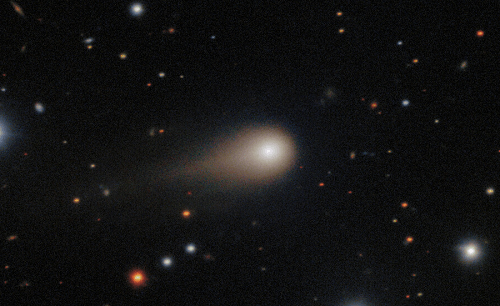
The 3I/Atlas interstellar comet is making its way through the Solar System at about 70 km/sec. It will not at any time be visible with binoculars from Earth. By analyzing its diffuse dust and gas created by our sun’s warmth and light pressure, we are learning about its composition, which is slightly different from Solar System comets.
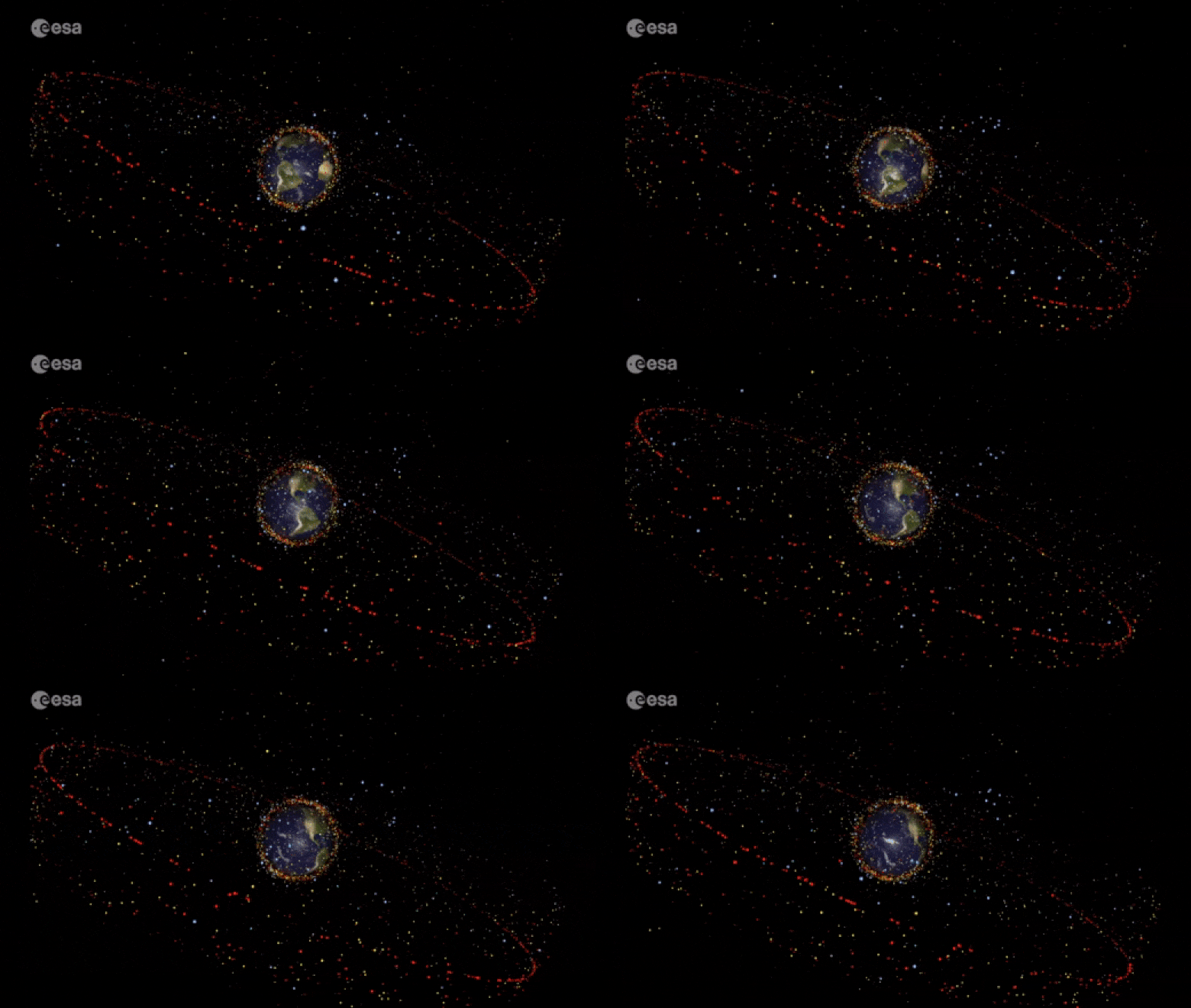
Currently there are 11,700 active satellites and 30,000 defunct satellites and pieces of debris in Earth orbit. In case you’re wondering, the red dots in a large circle represent satellites in geostationary orbit – GEO – where each is stationed continuously over the same spot on Earth along the equator.
RAFFLE
Our raffle prize is a 325ml Caffeine Mug. Just send an email before noon Friday to david.almandsmith <at> gmail <dot> com with your guess of an integer between 0 and 1,000. Last time, the eOracle muttered “655” and Hal’s guess of 650 won the Milky Way Galaxy light.
CLIMATE
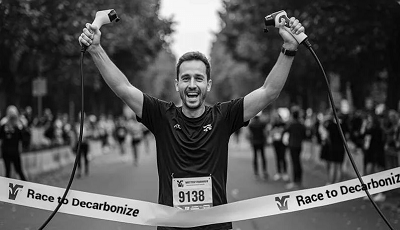
Due to advances in mining, charging, and recycling, EVs now have a lower carbon footprint than ICE [Internal Combustion Engine] vehicles regardless where you live in the U.S.
President Trump on Tuesday in front of the United Nations General Assembly: “This ‘climate change,’ it’s the greatest con job ever perpetrated on the world, in my opinion. All of these predictions made by the United Nations and many others, often for bad reasons, were wrong. They were made by stupid people that have cost their countries fortunes and given those same countries no chance for success. If you don’t get away from this green scam, your country is going to fail.” [No comment needed.]
In August i wrote about our Federal government’s release of a Climate Assessment authored by climate deniers. Since then, real climate scientists fact-checked the document and found over 100 claims that are false or misleading.
Things to Do this Week
There are many wonderful science-related events this week. Peruse them all on the Bay Area Science Calendar. Below are my (biased) picks.
Diving for Science in Antarctica Monday Noon, Sonoma State University
Wonderfest – AI for Learning Tuesday 7pm, Novato
The Rise of Invisible AI-Powered Health Tech – Wednesday 4pm, UC Berkeley
Deepfakes, Dirty Tricks, & the Future of Trust Livestream Thursday 4pm
ARCHAEOLOGY
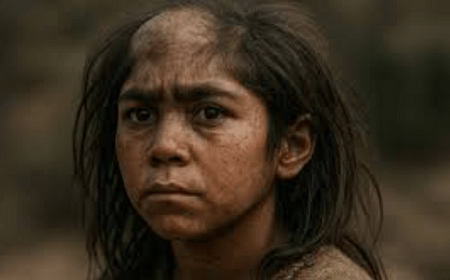
About half a million years ago, a Homo heidelbergensis girl was born with lambdoid synostosis, a cranial abnormality which likely rendered her unable to care for herself. However, she lived to be 10+ years old. This strongly suggests that others in her hunter-gatherer clan invested considerable effort in caring for her; behavior suggestive of compassion and empathy.
About 2.6 million years ago, hominins picked out suitable stones, transported them several kilometers, and then fashioned them into tools. ¿How did they ‘transport’ the stones? Satchels made from animal skins? Travois? Uber?
FUN NERDY VIDEOS
Zooming in on a Milky Way Neighborhood – HubbleWebbEsa – 1.5 mins
Teaching Robot Manipulation across ‘Embodiments’ – Google DeepMind – 2 mins
Experiment Rules Out Bohmian Mechanics – Sabine Hossenfelder – 5.5 mins
History of the Urinary Catheter – The Right Chemistry – Dr. Joe Schwarcz – 6 mins
Science in Health, Wealth, & War – Star Talk Plus – Neil deGrasse Tyson – 7.5 mins
The Time of Peak Amber – PBS Eons – Michelle Barboza-Ramirez – 10.5 mins
¿When Did Humans ACTUALLY Get to the Americas? – SciShow – Savannah Geary – 11 mins
Antarctica’s Dry Valleys – Dr. Gilbz – Ella Gilbert – 12.5 mins
Disasters & Deaths; Worse than We Thought – PBS Terra – Maiya May – 14 mins
2 freak accidents & human evolution – Big Think – Sean B. Caroll – 20 mins
Curium – Tales from the Periodic Table – Ron Hipschman – 36 mins
Bird Intelligence Research – PBS NOVA – 50 mins
¿Want to get out of the house and make a new friend or two? ¿Would you demonstrate against the ‘War on Science’? Consult this listing of gatherings in your area.
Stay well. Stay curious.
Dave Almandsmith, Bay Area Skeptics
“Journalists have a wealth of stories at their fingertips once they reject the notion that truth is subjective and start asking for evidence and digging into details. They especially have a wealth of stories at their fingertips when they start exploring how science is being intentionally misrepresented by vested interests.”
― Shawn Lawrence Otto [1961 – ] American writer, producer, & science advocate
Upcoming Events:
Click to see the next two weeks of events in your browser.
Monday, 09/29/2025
Diving for Science in Antarctica - 09/29/2025 12:00 PM
Sonoma State University - Biology Colloquium Rohnert Park
Abbey Dias is an alum of the Biology Department’s Graduate Program at SSU, and former member of the Hughes Lab. She is currently the Assistant Diving and Boating Safety Officer for the UC Davis Bodega Marine Lab. Abbey is also a talented underwater photographer, “...combining science with film to promote conservation.” Her short film was featured in the 2022 International Ocean Film Festival.
Speaker: Abbey Dias, UC Davis Bodega Marine Laboratory
Canaries in the Coal Mine? Six Facts about the Recent Employment Effects of Artificial Intelligence - 09/29/2025 12:00 PM
Gates Computer Science Building Stanford
This paper examines changes in the labor market for occupations exposed to generative artificial intelligence using high-frequency administrative data from the largest payroll software provider in the United States. We present six facts that characterize these shifts. We find that since the widespread adoption of generative AI, early-career workers (ages 22-25) in the most AI-exposed occupations have experienced a 13 percent relative decline in employment even after controlling for firm-level shocks.
In contrast, employment for workers in less exposed fields and more experienced workers in the same occupations has remained stable or continued to grow. We also find that adjustments occur primarily through employment rather than compensation. Furthermore, employment declines are concentrated in occupations where AI is more likely to automate, rather than augment, human labor. Our results are robust to alternative explanations, such as excluding technology-related firms and excluding occupations amenable to remote work.
These six facts provide early, large-scale evidence consistent with the hypothesis that the AI revolution is beginning to have a significant and disproportionate impact on entry-level workers in the American labor market.
Speakers: Bharat Chandar, Ruyu Chen, both Stanford University
Attend in person or online (register at weblink)
Compartmentalizing and connecting the mitochondrial collective through pearling and bridging - 09/29/2025 04:00 PM
Stanley Hall Berkeley
Mitochondria form dynamic networks, transitioning between a highly interconnected reticulum and a collection of dissociated rod-shaped individuals. How these dynamics serve the mitochondrial life cycle of proliferation and quality control remains poorly understood. Moreover, mitochondria can form homotypic membrane contact sites which bridge neighboring organelles - yet their function, protein identity, and structure remain enigmatic. We combine live-cell phase and super-resolution fluorescence microscopy, and cryo-electron tomography to dissect the impacts of bridging and pearling on the mitochondrial collective.
Speaker: Suliana Manley, Swiss Federal Institutes of Technology (EPFL)
Energy Efficiency Past, Present and Future: The Resource That Keeps On Giving - 09/29/2025 04:30 PM
Stanford University Energy Seminar Stanford
California has pioneered energy efficiency for more than six decades, transforming it into a professionalized practice and global model. After 20+ years of flat electricity demand, load growth is returning - driven by electrification, digitalization, and new industries - making efficiency more essential than ever.
Today’s efficiency goes beyond traditional savings. It now includes grid-interactive strategies that use digital communications, advanced controls, automation, and aggregation to align demand with system needs. By making buildings and devices dynamic participants in the grid, efficiency strengthens reliability, integrates renewables, and accelerates decarbonization, and even puts downward pressure on electric rates.
This talk will trace the evolution of efficiency, highlight California’s leadership, and show how this ever-renewable resource continues to shape a sustainable energy future
Speaker: Andrew McAllister, California Energy Commission
Attend in person, or see weblink for streaming information
Tuesday, 09/30/2025
Living and Immortal Cationic Polymerization Methods for the Synthesis of Sustainable Polymers - 09/30/2025 11:00 AM
Latimer Hall Berkeley
Speaker: Brooks Abel, UC Berkeley
Diurnal regulation of choroid plexus modulates CSF composition and the blood-CSF barrier - Livestream - 09/30/2025 12:00 PM
Stanford University
Speaker: Ryann Fame, Stanford University
Energy Transition Leadership Seminar: Shell VP of Energy Transition, Andrey Shuvalov - 09/30/2025 03:00 PM
ChEM-H/Neuroscience Building, Gunn Rotunda (E241) Stanford
Stanford Energy welcomes Andrey Shuvalov, Vice President, Energy Transition at Shell USA, for a conversation with Will Chueh, Director of Stanford’s Precourt Institute for Energy. In this session, Shuvalov will discuss how Shell balances delivering a secure supply of energy sources giving customers more choice and less emissions, all within a dynamic and evolving energy system. He will share how scenario thinking can help give context about developing markets, technology, and innovation. Drawing on Shell’s 2025 Energy Security Scenarios, the conversation will also explore how AI can both lift energy demand and accelerate decarbonization, and what this might mean for the U.S. across electrification, hydrogen, CCS, and reliable, lower - carbon power for data centers and more.
Attend in person or online. Register at weblink
Pressure-induced nanoparticle assembly - 09/30/2025 04:00 PM
Latimer Hall Berkeley
Precise control of structural parameters through nanoscale engineering to improve optical and electronic properties of functional nanomaterials continuously remains an outstanding challenge. Previous work on nanoparticle synthesis and assembly has been conducted largely through solution chemistry at ambient pressure and relies on specific chemical or physical interactions such as van der Waals interactions, dipole-dipole interactions, chemical reactions, ligand-receptor interactions, etc. In this presentation, I will introduce a new pressure-induced assembly and fabrication method that uses mechanical compressive force applied to nanoparticles to induce structural phase transition and to consolidate new nanomaterials with precisely controlled structures and tunable properties. By manipulating nanoparticle coupling through external pressure, instead of through solution chemistry, a reversible change in their assemblies and properties can be achieved and demonstrated. In addition, over a certain threshold, the external pressure will force these nanoparticles into contact, thereby allowing the formation and consolidation of one- to three-dimensional nanostructures. Through pressure induced nanoparticle assembly, materials engineering and synthesis become remarkably flexible without relying on traditional crystallization process where atoms/ions are locked in a specific crystal structure. Therefore, morphology or architecture can be readily tuned to produce desirable properties for practical applications. (SAND2024-00611O)
Speaker: Hongyou Fan, Sandia National Laboratories
Wonderfest - AI for Learning - 09/30/2025 07:00 PM
Hopmonk Tavern Novato
AI tools are everywhere now, promising to help us write, solve, understand, and create faster and more easily than ever. But there is a growing concern: Are these tools actually helping us learn, or just making it look or feel like we know something? Can we develop AI systems to support deep human learning? Truly useful systems don’t just give answers, but help us to build metacognitive skills to think critically, reflect, and adapt as we learn.
Speaker: Kelsey Urgo, UC SanFrancisco
Our Humpback Whales: Locals… but not locals only - Livestream - 09/30/2025 07:00 PM
American Cetacean Society
California humpback whales are seasonal migrants between here and mostly Mexico and Central America, a simple general pattern, but when we look deeper the patterns are complex and persistent across huge population changes. Join us for an exploration of new technology enabling a deep dive into the lives of leviathans, and the understanding recently revealed. We are delighted to have Ted Cheeseman, founder of Happywhale share insights from his unique vantage point and knowledge.
Register at weblink
Wednesday, 10/01/2025
UC Santa Cruz Whole Earth Seminar - 10/01/2025 12:00 PM
Earth and Marine Sciences Building Santa Cruz
Speaker: Qing Ji, Stanford University
The Quest for Cooperation in Regional Sea Level Rise Adaptation - 10/01/2025 01:30 PM
Estuary & Ocean Science Center Tiburon
Attend in person or watch on Zoom
Speaker: Mark Lubell
Editor’s Note: This talk was originally scheduled for October 8, 2025
‘Into the Clear Blue Sky’ - Livestream - 10/01/2025 02:00 PM
Stanford Woods Institute for the Environment
Woods Senior Fellow Rob Jackson is the author of Into the Clear Blue Sky: The Path to Restoring Our Atmosphere (Simon & Schuster). Jackson, a professor of earth science with the Stanford Doerr School of Sustainability, is chair of the Global Carbon Project and one of the top five most-cited climate and environmental scientists in the world.
He is also a poet and artist, and his book melds science with compelling storytelling to offer a hopeful and attainable vision for restoring the atmosphere and ending the climate crisis. Named one of Scientific American’s and The Times (London’s) best books of 2024, Into the Clear Blue Sky introduces the brilliant leaders and innovators behind some of the boldest and game-changing climate solutions under development. Decades of inaction have convinced Jackson that we need to remove greenhouse gases from the air using everything from nature to cutting-edge technologies. In this talk he and Woods faculty director Chris Field how we can use technologies and social movements to restore the atmosphere in the same spirit we use to restore habitats and endangered species.
Bodega Marine Lab Seminar Series - Canceled - 10/01/2025 03:00 PM
Bodega Marine Laboratory
Join us for the UC Davis Bodega Marine Laboratory Seminar Series, featuring speakers from within the marine sciences community and beyond.
Speaker: Halley Froehlich, UC Santa Barbara
Delta Futures: Time, Territory, and Capture on a Climate Frontier - 10/01/2025 03:30 PM
McCone Hall Berkeley
Delta Futures explores the competing visions of the future that are crowding into the Bengal Delta’s imperiled present and vying for control of its ecologically vulnerable terrain. In Bangladesh’s southwest, development programs that imagine the delta as a security threat unfold on the same ground as initiatives that frame the delta as a conservation zone and as projects that see its rivers and ports as engines for industrial growth. This talk, and the book upon which itis based, explores how these competing futures are being brought to life: how they are experienced, understood, and contested by those who live and work in the delta, and the entanglements they engender - between dredgers and embankments, tigers and tiger prawns, fishermen and forest bandits. These future visions produce the delta as a “climate frontier,” a zone where opportunity, expropriation, and risk in the present are increasingly framed in relation to disparate visions of the delta’s climate-affected future.
Speaker: Jason Cons, University of Texas, Austin
Beyond Wearables: The Rise of Invisible AI-Powered Health Tech! - 10/01/2025 04:00 PM
Soda Hall Berkeley
We face a “silver tsunami”: the number of older adults is increasing at an unprecedented rate, while shortages of both professional and family caregivers are growing. Can technology help? What if AI could analyze the wireless signals that bounce around a home and measure people’s physiological signals, diagnose new diseases, detect exacerbations of existing conditions, and track medication response, all without wearables and as patients go about their daily lives?
In this talk, I will describe how we can achieve this vision. Our work is enabled by two technologies. First, my lab has created a device resembling a Wi-Fi box that uses AI to analyze wireless reflections from individuals, enabling measurement of respiratory, cardiovascular, EEG, and musculoskeletal signals, without body contact. These devices are already used by pharmaceutical companies and deployed with patients living with Parkinson’s disease, Alzheimer’s disease, ALS, lupus, Crohn’s disease, and rheumatoid arthritis (RA), generating a large real-world dataset to train and validate the AI models. Second, I will explain how we adapted large language model (LLM) methods to interpret physiological data, establishing a foundation model for screening complex diseases and tracking medication response. I envision a future in which “the Invisibles”, a new class of AI-powered, contactless sensors, enable smart health environments and shift care from reactive to proactive, improving health and well-being.
Speaker: Dina Katabi, Massachussets Institute of Technology
Attend in person or online (See weblink)
On the Air: Learn How to Fight Air Pollution In Your Neighborhood - 10/01/2025 07:00 PM
220 Montgomery Building San Francisco
To celebrate California Clean Air Day on October 1, learn how to affordably transition to cleaner energy ??” and cleaner air ??” in your home and neighborhood.
Many people think of cars and factories as the main sources of air pollution. But in the Bay Area, gas-powered appliances actually produce more nitrogen oxides (NOx) ??” smog-forming and climate-warming gases ??” than vehicles do. Replacing them with electric alternatives could save hundreds of lives each year in California.
But replacing home appliances can be expensive. And the Trump administration is cutting clean energy funding. So, whether you own or rent your home, what can you do?
This event will feature:
A panel of experts, residents, and government leaders who will share steps you can take to transition your home off polluting appliances ??” whether you’re a renter or homeowner.Information and advice from service providers and community leaders
How to Become a Medical Professional - 10/01/2025 07:30 PM
Marin Science Seminar San Rafael
The paths to becoming a doctor, nurse, medical scientist and more” with Panel of Medical Professionals TBA
Creepy or Captivating? A Spider Scientist’s Perspective - 10/01/2025 07:30 PM
Marin Science Seminar San Rafael
Speaker: Trinity Walls, UC Berkeley
Thursday, 10/02/2025
Emissions from the Mexican power grid to inform decarbonization pathways - Livestream - 10/02/2025 12:00 PM
Stanford Energy
The EARNEST Consortium, sponsored by the U.S. Department of Energy (DOE), is dedicated to identifying and advancing solutions for the future of the U.S. electricity system. As part of its public engagement efforts, EARNEST is hosting its first webinar series focused on “U.S. Grid Reliability and Resilience.” This upcoming session will discuss climate pollutant emissions from the Mexican power grid to enable analysis of future interconnection projects between Mexico and the United States, and their potential to foster decarbonization strategies.
The need to address decarbonization scenarios in power grids has motivated utilities to develop low-carbon pathways without compromising reliability and power delivery to end users. However, to mitigate carbon emissions in power grids, large amounts of renewable energy need to be integrated considering not only uncertainty in investment and political certainty but also transmission capacity to avoid energy curtailments of photovoltaic and wind power plants. This involves the development of prediction models to address low carbon emissions from power grids based on the dispatch as accounted in the electricity markets (i.e., a top-down approach). In this context, an analysis of the Mexican power grid is addressed based on monthly reports provided (hourly energy dispatched) by the National Center for Energy Control (known in Spanish as CENACE) to define the baseline emissions from the Mexican grid. This will enable an analysis of the future perspective in terms of new generation projects and the increasing demand for power in cross-border regions between Mexico and the US. In addition, reduced equivalent grid models are essential to represent the most essential zones of generation, power demand, and transmission lines of the Mexican power grid, which will help to explore new interconnection scenarios to improve reliability and resilience.
Speakers: Alberto Mendoza and Daniel Guillen, both from the Tecnologico de Monterrey
Register at weblink
Petrology and thermal modelling to delineate scenarios for the evolution of the 75 years long unrest at Campi Flegrei - 10/02/2025 12:00 PM
Mitchell Earth Sciences Building (04-560) Stanford
Campi Flegrei are one of the most dangerous active volcanoes on Earth with approximately 2 million people leaving within its caldera. Since the 1950’s the centre of the caldera has uplifted more than 5 m, with 4 main unrest episodes, the last of which is currently ongoing. I will first present a summary of the eruptive history of Campi Flegrei, and the most recent studies, before presenting the results we obtained to constrain the volume of eruptible magma currently present at 4-5 km depth and to identify the trigger mechanisms of past eruptions of different intensity. Our results serve to delineate plausible future scenarios for the evolution of the ongoing unrest.
Speaker: Luca Caricchi, University of Geneva
Attend in person or online (see weblink)
Room 350/372
Radical End-Use Efficiency and Grid Implications - 10/02/2025 01:30 PM
Allen Building Annex (04-055 Stanford
Speaker: Amory Lovins, Rocky Mountain Institute, retired
Attend in person or online (See weblink)
SETI Live: Hidden Habitability on Ceres - Livestream - 10/02/2025 02:30 PM
SETI Live
Join host Beth Johnson and guest Dr. Sam Courville, lead author of a new study on Ceres, as they dive into the possibility that the dwarf planet may have had the energy needed to support habitability for much longer than once believed. Using data from NASA’s Dawn mission, researchers uncovered evidence of persistent geologic activity, brine movement, and long-lived energy sources beneath Ceres’ icy surface. Could this small world in the asteroid belt have been more habitable than we ever imagined?
Watch on Facebook Watch on YouTube
Reconceptualizing Mentoring - 10/02/2025 03:30 PM
Campbell Hall, Rm 131 Berkeley
Speaker: Joyce Yen, University of Washington
A Brief History of Electrical Engineering - 10/02/2025 04:00 PM
Sonoma State Dept. of Engineering Science Rohnert Park
Expedition in pursuit of protection, exposed humans to a mysterious phenomenon in nature, electricity. His strong sense of curiosity enabled him to develop an understanding along with technology that became an essential part of his life support.
In this talk we pursue the discovery, progress in understanding, and engineering of electricity in various fields.
Speaker: Mahmoud Noorchashm, AT&T Bell Laboratories
Deepfakes, Dirty Tricks, and the Future of Trust - Livestream - 10/02/2025 04:00 PM
Skeptical Inquirer
From ghost photos to UFO sightings, people have always been drawn to illusions. Deepfakes are the modern version - sharper, faster, and designed to exploit trust at scale. They’re already fueling disinformation campaigns, powering scams, and giving cybercriminals a powerful new playbook.
Join us for a Skeptical Inquirer Presents livestream with cybersecurity and deception expert Perry Carpenter. His book, FAIK: A Practical Guide to Living in a World of Deepfakes, Disinformation, and AI-Generated Deceptions, provides a crucial breakdown of the potential risks of generative AI and outlines strategies to avoid falling victim to its more sinister uses. Carpenter will pull back the curtain on how synthetic media manipulates belief, show live demonstrations of the latest tricks, and reveal what’s at stake for the future of truth and trust.
Register at weblink
The Pediatric Moonshot: Reducing Health Inequity, Lowering Cost and Improving Outcomes for Children - 10/02/2025 05:30 PM
Commonwealth Club San Francisco
There are no pediatric specialists in 60 percent of the rural counties in the United States. Diseases such as Cortical Dysplasia cause epileptic seizures, multiple times a day. The good news is that only 25,000 children are affected a year, but the bad news is that no one specialist sees enough cases to diagnose from an MRI scan. Building more medical schools and incentivizing pediatric cardiologists to live in Montana are not the solution to this problem. Instead, imagine privacy-preserving real-time AI applications deployed to the point of care in rural California or Rwanda.
This program will focus on the Pediatric Moonshot, whose mission is to reduce health-care inequity, lower costs and improve health outcomes for children rurally, locally and globally - by creating privacy-preserving real-time AI applications based on access to data in all 1 million health-care machines in all 500 children’s hospitals in the world. We’ll talk about the progress to date making the mission a reality and the challenges and opportunities going forward.
Speaker: Dr. Timothy Chou, Pediatric Moonshot; Robert Lee Kilpatrick, Commonwealth Club, Moderator
After Dark: Plug and Play - 10/02/2025 06:00 PM
ExplOratorium San Francisco
Explore the world of acoustics, rhythm, and vibrations through playful exhibits and surprising sonic experiences. Treat your ears to an inspiring performance by Awesöme Orchestra, play a round of Science Trivia, and dive into the phenomena of sound with an exhibit scavenger hunt. Whether you’re looking for a group hang or restful moments by yourself, our Thursday night After Darks have you covered.
Ages 18+
NightLife: BigPicture - 10/02/2025 06:00 PM
California Academy of Sciences San Francisco
Step inside the frame and catch some of nature’s most striking images during the sneak peek event of this year’s BigPicture: Natural World Photography exhibition.
Ages 21+
Reinventing the way we break down plastic waste - 10/02/2025 07:00 PM
Stanford Linear Accelerator (SLAC) Public Lecture Series Menlo Park
From our kitchens to our clothes to the delivery of medicines, plastics play an indispensable role in our daily lives. But, the end-life of these plastics is not always taken into account. Few types of plastics can be readily recycled, and durable plastics take centuries to break down in landfills or in the environment. Here at SLAC, we are designing chemical processes that can break down plastics under controlled conditions while also making useful products. Using X-ray light, we observe the details of this breakdown at the atomic level and use this information to design pathways for the degradation of plastics into useful products. We are members of a consortium that aims to make tomorrow’s plastics recyclable and biodegradable by design. In this lecture, I will describe my work on visualizing and improving our methods for breaking down plastic waste into useful products.
Speaker: Ozge Bozkurt, SLAC
Attend in person, or watch on Zoom (register at weblink) or YouTube
Friday, 10/03/2025
Using Chlorine Isotopes As A Probe To Understand Planetary Processes - 10/03/2025 12:00 PM
Earth and Marine Sciences Building Santa Cruz
Speaker: Tyler Anderson, Lawrence Livermore National Lab
UC Berkeley Inorganic Chemistry Seminar - 10/03/2025 04:00 PM
Latimer Hall Berkeley
Speaker: Amy Prieto, Colorado State University
First Friday Nights at CuriOdyssey - 10/03/2025 05:00 PM
CuriOdyssey San Mateo
Swing into the weekend with science, animals, music, food trucks, and fun! On the first Friday of every month, parents and kids celebrate together at CuriOdyssey.
Dance to some of your favorite hits, while enjoying animal presentations and science activities. Activities and programs are different each time, so make it a monthly tradition!
First Friday: Spooky Astronomy - 10/03/2025 06:00 PM
Chabot Space and Science Center Oakland
Get in the Halloween spirit with a night of cosmic chills and family thrills. Join us for a frightfully fun evening featuring live music, ooey gooey science demos, creepy crafting, and a spook-tacular Halloween-themed laser show! Perfect for all ages, this is one event your family won’t want to miss!
First Friday with Kirsten Carlson - 10/03/2025 06:00 PM
Pacific Grove Museum of Natural History Pacific Grove
Join us on First Friday for a special opportunity to meet science illustrator and artist Kirsten Carlson! Explore her stunning work that blends art, science, and storytelling, and hear firsthand about her creative process and passion for the natural world.
Come get inspired, ask questions, and connect with the artist!
Illuminating the Universe Through Weak Gravitational Lensing - 10/03/2025 08:00 PM
College of San Mateo Bldg 36 San Mateo
Question: How can we learn about matter that we can’t see? Answer: By looking at how the invisible matter’s gravity affects the matter we can see. This is gravitational lensing, an exciting and active field of cosmology research through which we hope to answer fundamental questions about the universe like the nature of dark matter and dark energy. In this talk, I’ll focus on weak gravitational lensing: how it works, what It can tell us about the universe, and the prospects for up-and-coming weak lensing surveys with the Rubin Observatory and Roman Space Telescope.
Speaker: Katherine Laliotis, Ohio State University
Saturday, 10/04/2025
First Saturday: Free Tour of the Santa Cruz Arboretum - 10/04/2025 11:00 AM
Santa Cruz Arboretum & Botanic Garden Santa Cruz
Around the World in 60-90 Minutes!
On the first Saturday of each month, the Arboretum offers a docent or staff-led tour of the Arboretum.
Sometimes you will see New Zealand, South Africa, California, and Australia. Sometimes you might see combinations of several gardens or the developing World Conifer Collection or Rare Fruit Garden. Tour length varies depending on what’s in bloom and what the participants request.
Meet your tour guide(s) at 11:00 am at the entrance to the visitor parking lot. (Tours are canceled when the weather isn’t suitable.)
Arboreteum cost is $10 General, $8 Seniors, $5 Ages 4 - 17
City Public Star Party - 10/04/2025 06:00 PM
City Star Parties - Tunnel Tops Park San Francisco
Come join the San Francisco Amateur Astronomers for free public stargazing of the Moon, planets, globular clusters and more!
The event will take place in Tunnel Tops National Park, parking is located adjacent to Picnic Place (210 Lincoln Blvd for GPS) with the telescopes setup in the East Meadow.
Dress warmly as conditions can be windy or cold in the Presidio. Rain, heavy fog or overcast skies cancel the event. Check the SFAA website for a cancellation notice before leaving for the star party.
Observe the Moon night - 10/04/2025 07:30 PM
Foothill College Los Altos Hills
Join Foothill College Astronomy and the Peninsula Astronomical Society at NASA’s Observe the Moon night!
Observe the moon and other astronomical objects at Observe the Moon night. The Foothill College observatory will be open, along with portable telescopes alongside the observatory. Come for the detailed view of the moon, stay for the other splendors of the night time sky!
At the Observatory
Monday, 10/06/2025
Beyond the Myth: How Regulation Fuels Smarter Innovation in an AI World - 10/06/2025 09:15 AM
Commonwealth Club San Francisco
In July, the European Union unveiled new rules to regulate artificial intelligence as part of its landmark 2024 AI Act, the world’s first comprehensive AI law. The rules are aimed at promoting safety and transparency and protecting copyright holders, among other things.
The Trump administration released its own AI Action Plan in July, taking more of a hands-off approach. In August, President Trump threatened to impose new tariffs on countries with technology regulations he deems “discriminatory” to U.S. companies. The European Commission responded by defending the “sovereign right” of the EU to impose and enforce its own tech rules.
The tension has been summed up as “U.S. innovates, Europe regulates.” Still, there is far from consensus within Europe or the United States about how to approach AI. Could well-crafted rules actually help innovators by fostering trust, enabling market access, and driving responsible growth? In this panel discussion, presented in partnership with hub.brussels, we’ll hear from regulators and other experts about striking the right balance between creating effective AI guardrails and fostering the growth of the industry.
Speakers: Gerard de Graff, European Union Office, San Francisco; Marijke Schroos, Microsoft Belgium & Luxembourg; Jane Murphy, EDPO
Attend in person or online.
The Roadmaps for Mammalian Joint Regeneration: Lessons Learned from Joint Development - 10/06/2025 12:00 PM
Sonoma State University - Biology Colloquium Rohnert Park
Speaker: Dr Lindsay Dawson, Texas A & M University
Symbolic Systems Forum - 10/06/2025 12:30 PM
Computing and Data Science Building (CoDA) Stanford
Abstract TBA
UFM1: a tiny protein with a mighty long reach - 10/06/2025 04:00 PM
James H. Clark Center (Bldg 340) Stanford
Speaker: Ron Kopito, Stanford University
Single-Molecule Imaging Reveals the Mechanism of Bidirectional Replication Initiation in Higher Eukaryotes - 10/06/2025 04:00 PM
Stanley Hall Berkeley
Chromosomes are copied from thousands of origins. At each origin, two replicative DNA helicases are first assembled, then activated to begin unwinding DNA. Several replication proteins are subsequently recruited to the active helicase, forming a replisome. The helicase must undergo dramatic conformational changes during its activation and this process is poorly understood, especially in metazoa. How the metazoan replicative helicase is activated, and which proteins promote this essential process are long-standing questions. Using a combination of single-molecule imaging and ensemble biochemistry, we systematically dissected how two replicative DNA helicases are first assembled, then activated at each replication origins. Our findings reveal a surprisingly dynamic mechanism of initiation, help resolve long-standing contradictions in the field, and overturn long-held views about the roles of key replication initiation factors.
Speaker: Gheorghe Chistol, Stanford School of Medicine
Building within Planetary Boundaries: Dream or Reality? - 10/06/2025 04:30 PM
Stanford University Energy Seminar Stanford
Humanity today faces the unprecedented challenge of staying within the nine planetary boundaries that define a safe operating space for our planet: from greenhouse gases and land use change to freshwater disruption, ocean acidification, and the spread of novel entities. The building sector - responsible for nearly 40% of global CO? emissions, 50% of material consumption, and 40% of waste generation - plays a central role in this challenge.
In this talk, Prof. Werner Lang will argue that incremental improvements are no longer enough: “being less bad is not good enough.” Instead, the construction sector must undergo a fundamental transformation that allows buildings and cities to achieve positive ecological footprints. Drawing on case studies and research from his Chair of Energy-Efficient and Sustainable Design and Building at the Technical University of Munich, Prof. Lang will present strategies for rethinking the built environment through systemic planning, regenerative design, circular material flows, renewable energy, biodiversity integration, and life cycle assessment. His vision: building as a force for planetary restoration rather than depletion.
Speaker: Werner Lang, Technical University of Munich
Attend in person, or see weblink for streaming information
A Once in a Lifetime Work - The Wall of Birds Turns Ten - Livestream - 10/06/2025 06:00 PM
San Francisco Bay Bird Observatory
With 2025 marking the 10-year anniversary of the “Wall of Birds” at the Cornell Lab of Ornithology, at this special Birdy Hour artist Jane Kim will take the audience on a spectacular 375-million year artistic journey celebrating the evolution and diversity of birds. Jane will reflect on how the mural has shaped her career and will reveal lessons and tales learned from the project that hold more relevance today than ever before.
Speaker: Jane Kim, artist, Ink Dwell
Register at weblink
The Search for Life in the Universe - 10/06/2025 07:30 PM
California Academy of Sciences San Francisco
Humans have wondered whether we are alone in the universe for millennia. Finally, a future NASA observatory may bring us the answers. NASA’s upcoming Habitable Worlds Observatory will follow in the tradition of other great observatories like Hubble and the James Webb Space Telescope. It will be the most powerful telescope NASA has ever launched. Excitingly, it will be the first facility designed specifically to search for signs of habitability and life on planets outside of our solar system. But correctly decoding the signatures of life on alien worlds will take more than just a powerful tool. Join us as we discuss strategies for life detection on worlds beyond our solar system for the next era of cosmic observations.
Speaker: Giada Arney, Goddard Space Flight Center
Tuesday, 10/07/2025
SETI Live: Space Weather Alert - 10/07/2025 02:30 PM
SETI Live
Twisted Trilayer Graphene Under the Microscope - 10/07/2025 03:30 PM
Hewlett Teaching Center Stanford
UC Berkeley Physical Chemistry Seminar - 10/07/2025 04:00 PM
Latimer Hall Berkeley
Adapting to Climate Change: What if We Get it Right? - 10/07/2025 06:00 PM
Log Cabin at the Presidio San Francisco
This Time It’s Different: AI Startups Across Three Generations - 10/07/2025 07:00 PM
Computer History Museum Mountain View
Wednesday, 10/08/2025
Bioluminescence and ultra-black camouflage in deep-sea fish - Livestream - 10/08/2025 11:00 AM
Monterey Bay Aquarium Research Institute
Resolving environmental challenges with wetland biogeochemistry - 10/08/2025 12:00 PM
Earth and Marine Sciences Building Santa Cruz
The Quest for Cooperation in Regional Sea Level Rise Adaptation - RESCHEDULED - 10/08/2025 01:30 PM
Estuary & Ocean Science Center Tiburon
Butterfly Walk in the Garden - 10/08/2025 02:00 PM
UC Botanical Garden Berkeley
The New Vera C. Rubin Observatory: Surveying the Universe - 10/08/2025 07:00 PM
Silicon Valley Astronomy Lecture Series Los Altos Hills
Spatial Phylogenetic Diversity - 10/08/2025 07:30 PM
Bay Area Mycological Society Berkeley
Difficult Conversations - AI and the Workplace - 10/08/2025 07:30 PM
Manny’s San Francisco
Thursday, 10/09/2025
SETI Live: Birth of Planets: Caught! - 10/09/2025 11:00 AM
SETI Live
PVsizer: A PV and battery storage design tool for landfill areas and beyond - Livestream - 10/09/2025 12:00 PM
Stanford Energy
PARC Forum: The Future of Trust - 10/09/2025 05:00 PM
PARC Forum Palo Alto
Mary Roach: Adventures in Human Anatomy - 10/09/2025 06:00 PM
Commonwealth Club San Francisco
After Dark: Dancing in the Sky - 10/09/2025 06:00 PM
ExplOratorium San Francisco
NightLife: Avenues - 10/09/2025 06:00 PM
California Academy of Sciences San Francisco
Black Holes: Spacewarps, Time Machines, and the Gruesome Deaths of Stars - 10/09/2025 06:30 PM
San Joaquin County Office of Education Stockton
Mushrooms of Sonoma County - 10/09/2025 06:45 PM
Sebastopol Grange Sebastopol
Aves Argentinas: From Rescue to Resilience - Livestream - 10/09/2025 07:00 PM
Marin Audubon Society
Geoengineering, Global Warming & Sunlight Reflection Methods - 10/09/2025 07:30 PM
Manny’s San Francisco
Air-Borne: The Hidden History of the Life We Breathe - Livestream - 10/09/2025 07:30 PM
Bay Area Skeptics
Friday, 10/10/2025
Earth and Planetary Sciences Seminar - 10/10/2025 12:00 PM
Earth and Marine Sciences Building Santa Cruz
Inverse Lithography Technology for Mask Synthesis - 10/10/2025 01:00 PM
Cory Hall Berkeley
Peptide frameworks as microcosms of proteins - 10/10/2025 04:00 PM
Latimer Hall Berkeley
Saturday, 10/11/2025
Forest bathing and walk - 10/11/2025 10:00 AM
Bouverie Preserve Glen Ellen
Family Nature Adventures: Spidey Spectacular - Adventures with Arachnids! - 10/11/2025 10:30 AM
Chabot Space and Science Center Oakland
Starry Nights Star Party - 10/11/2025 07:30 PM
Rancho Canada Del Oro Open Space Preserve Morgan hill
Sunday, 10/12/2025
Marine Science Sunday - Creatures of the Deep - 10/12/2025 10:30 AM
Marine Mammal Center Sausalito
Monday, 10/13/2025
Embryonic Endoderm Diversifies During Gastrulation - 10/13/2025 12:00 PM
Sonoma State University - Biology Colloquium Rohnert Park
UC Berkeley Structural & Quantitative Biology Seminar - 10/13/2025 04:00 PM
Stanley Hall Berkeley
Dynamics of host-pathogen coexistence - 10/13/2025 04:00 PM
James H. Clark Center (Bldg 340) Stanford
Is Affordability Possible When Costs are Rising? - 10/13/2025 04:30 PM
Stanford University Energy Seminar Stanford
Reimagining the Exploration of Fundamental Interactions with AI - 10/13/2025 04:30 PM
Stanford Linear Accelerator (SLAC) Colloquium Series Menlo Park